 Peak
PeakGilgit
Gilgit-Baltistan
Gilgit is the administrative hub of the north and the place to sort permits, cash and transport before Hunza or Skardu.
from Rs 5,000/nightView stays
Destination guide
Skardu sits at about 2,230 metres where the Shigar river meets the Indus. The season runs April to October, and Deosai opens once snow clears, usually late May or June. Rooms in town run Rs 6,000 to Rs 13,000, lake and fort properties Rs 18,000 to Rs 32,000. Flights from Islamabad take an hour but cancel often.
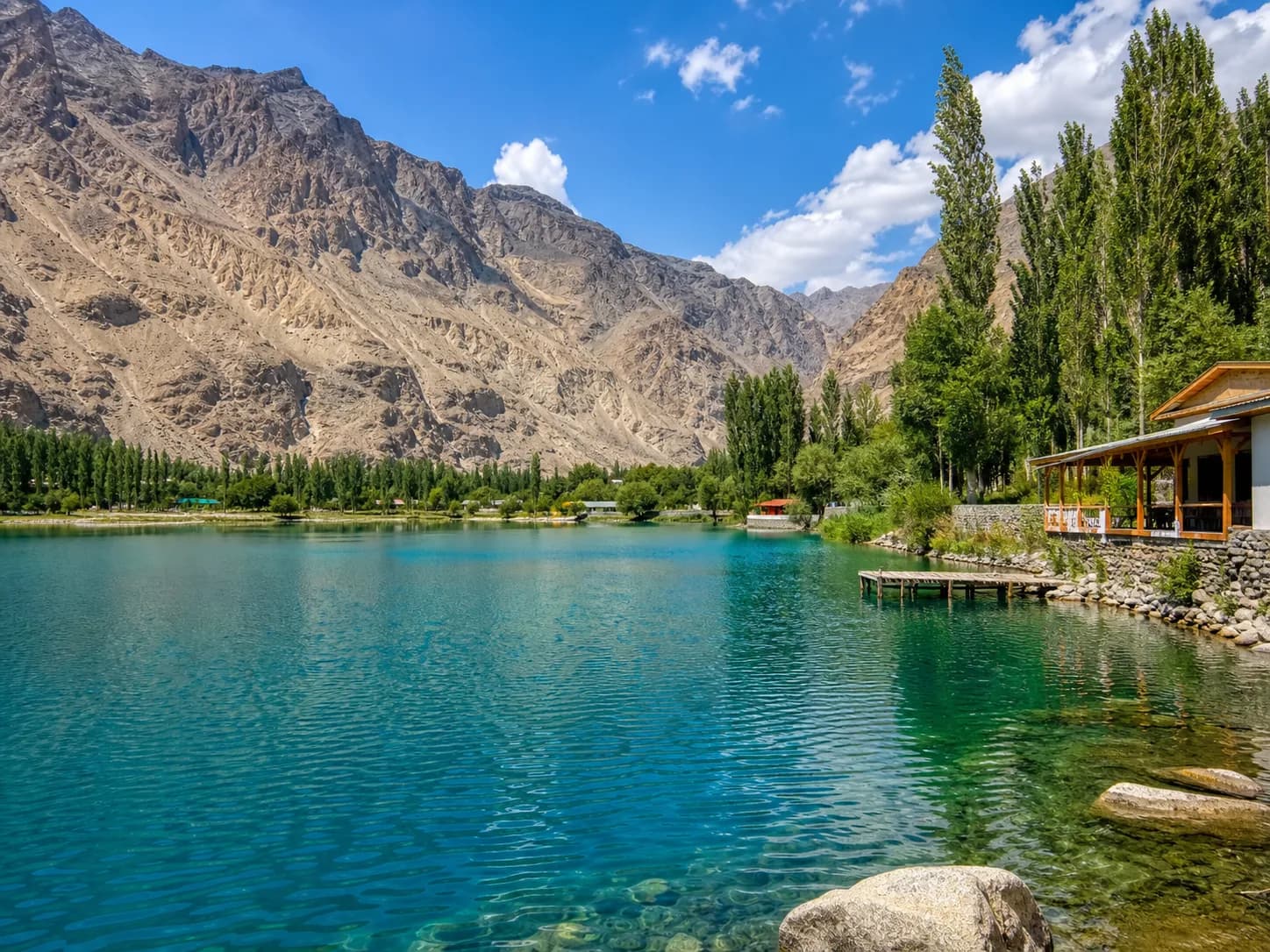
The Skardu season runs April to October, and within it the calendar splits into four fairly distinct trips. April brings blossom to the Shigar and Khaplu valleys, which is the quiet, pretty end of the season and the one fewest people plan for. Late May and June is when the Deosai plateau usually opens, once snow clears from the approach tracks — and since Deosai is the single item most Skardu itineraries are built around, that opening date effectively sets the start of the main season.
July and August are the trekking months and the busiest. Room rates climb thirty to forty percent, every vehicle is spoken for, and you should be booking three to four weeks ahead. Late September and October bring autumn colour and the clearest light of the year, with Deosai still open until around October and the crowds thinned out. If you are choosing on quality of experience rather than on school holidays, that autumn window is the strongest one.
Winter is severe. The town stays reachable by road and by flight when weather allows, most lake properties close, Deosai is entirely shut and movement into the side valleys is limited. Temperatures fall well below freezing. Winter visitors get very cheap rooms and empty landscapes in exchange for restricted movement and a real possibility of being stuck for several days, which is a legitimate trade only if nothing after the trip is fixed.
The flight from Islamabad takes about an hour and is by a wide margin the fastest way in. It is also the least reliable thing about a Skardu trip. Weather cancels flights regularly and the resulting backlogs take days to clear, so a cancellation is not a matter of catching the next one. Never book a tight international connection around a Skardu departure, and treat the return leg as the risky one — being stuck at the start of a holiday costs you a day, being stuck at the end costs you a flight home.
The road answer has improved a great deal. The rebuilt Gilgit to Skardu road covers the distance in around six hours and is now a comfortable drive rather than the ordeal it once was, which makes Gilgit a genuine fallback rather than a theoretical one. From Islamabad directly by road, allow twenty hours or two days via Besham. From roughly late June to October the Naran and Babusar route is the other option.
The practical planning rule that comes out of all this is to build the itinerary so a lost day does not break it. Four nights is the honest minimum for the lakes, Deosai and one of the outlying valleys, and that already assumes no flight delay. Five or six lets you add Khaplu properly and absorb a bad weather day without abandoning something.
Rooms come in two clear tiers. A mid-range double in town runs Rs 6,000 to Rs 13,000. The lake resorts at Shangrila and Upper Kachura and the restored fort hotels at Shigar and Khaplu sit at Rs 18,000 to Rs 32,000. Add thirty to forty percent in July and August. These are indicative bands — availability and the actual rate for your dates come back on a quote, not off a published tariff.
Jeep hire is the line that catches people out, and in Baltistan it is often larger than the room bill. Deosai as a day trip costs Rs 15,000 to Rs 25,000 per vehicle and takes a full day. Askole, the road head beyond Skardu for K2 base camp treks, costs considerably more; the exact figure moves with the season and the vehicle, so get it quoted rather than budgeted from a blog. Both are priced per vehicle, which makes a group of four dramatically cheaper per head than a couple.
Fuel is the third planning item and it is a safety one rather than a budget one. It is available in Skardu but not reliably beyond it, so fill up in town before any long day — Deosai, Khaplu, or anything heading toward Askole. That is the sort of thing which is obvious in hindsight and expensive at the time.
Hotels concentrate along the Skardu bazaar and the road out toward Satpara, which is the practical base: close to fuel, to the jeep operators and to the airport. The resort properties sit at Shangrila and Upper Kachura on the lakes, in the upper band, and buy you a setting rather than convenience.
Shigar and Khaplu are the two that reward moving. Shigar is an hour out, Khaplu about two, and both have restored fort hotels worth a night each — Khaplu in particular is the reason a five- or six-night trip beats a four-night one. Splitting a trip between town and one fort property is a better shape than staying in one place and driving out and back twice.
Book three to four weeks ahead for July and August. Outside those months there is more slack, though the lake and fort properties are small and the good rooms in them go first. Rates and current availability for specific dates sit on the Skardu hotels hub rather than in this guide.
Shangrila and Upper Kachura lakes and Satpara are half-day trips and the easiest things to do from town. Deosai is a full day and needs to be planned as one: the plateau sits at about 4,100 metres, weather changes fast even in July, and the jeep is out from morning to evening.
The Sarfaranga cold desert between Skardu and Shigar is the local curiosity and worth the detour — a genuine dune field at 2,200 metres, with 7,000-metre peaks behind it, which is the contrast that makes Skardu look unlike anywhere else in the country. Shigar valley and its restored fort take an hour to reach, Khaplu about two, and both are better as overnights than as day trips.
Anyone attempting a K2 base camp trek is planning a different holiday: two to three weeks in total, with Askole as the road head beyond Skardu. That is not something to bolt onto a five-day lakes-and-Deosai trip, and the logistics for it should be arranged before you arrive rather than in the bazaar.
Four nights is the practical minimum and it assumes nothing goes wrong with the flight. This is a five-day version, which is what we would actually suggest — the extra day is the one that absorbs a weather delay or lets Khaplu happen properly. It is a shape, not a schedule.
An hour by air from Islamabad if the weather cooperates, six hours from Gilgit on the rebuilt road, or the tail end of a twenty-hour drive from Islamabad via Besham. Take a room in town near the bazaar or on the Satpara road, arrange your vehicle for the days ahead, and remember that this is the last place with dependable fuel.
Shangrila, Upper Kachura and Satpara are half-day trips and pair naturally. If you are staying at one of the lake resorts rather than in town, this is the day to move out to it. An easy first full day at altitude, which is the other reason to put it here.
A full day by jeep at Rs 15,000 to Rs 25,000 per vehicle, onto a plateau at about 4,100 metres that usually opens once the snow clears in late May or June and closes again around October. Weather changes fast even in July, so take layers regardless of what the morning looks like. Fill the tank in Skardu before you leave.
An hour out to Shigar valley and its restored fort, with the Sarfaranga cold desert on the way — a dune field at 2,200 metres under 7,000-metre peaks. Worth staying the night at the fort property rather than returning to town, if the budget takes Rs 18,000 to Rs 32,000.
Khaplu is about two hours out and has the other restored fort hotel. If the flight in was delayed, or if the forecast is poor, this is the day to give back rather than the one to defend — which is exactly why it sits at the end.
The guide stops where the booking starts. Rates, areas and availability live on the hub pages, and one request reaches the guesthouses and rest houses that never appear on the big booking sites.
Most trips to Skardu pair with somewhere close by. These are the stops travellers add most often.
PeakGilgit-Baltistan
Gilgit is the administrative hub of the north and the place to sort permits, cash and transport before Hunza or Skardu.
 Peak
PeakGilgit-Baltistan
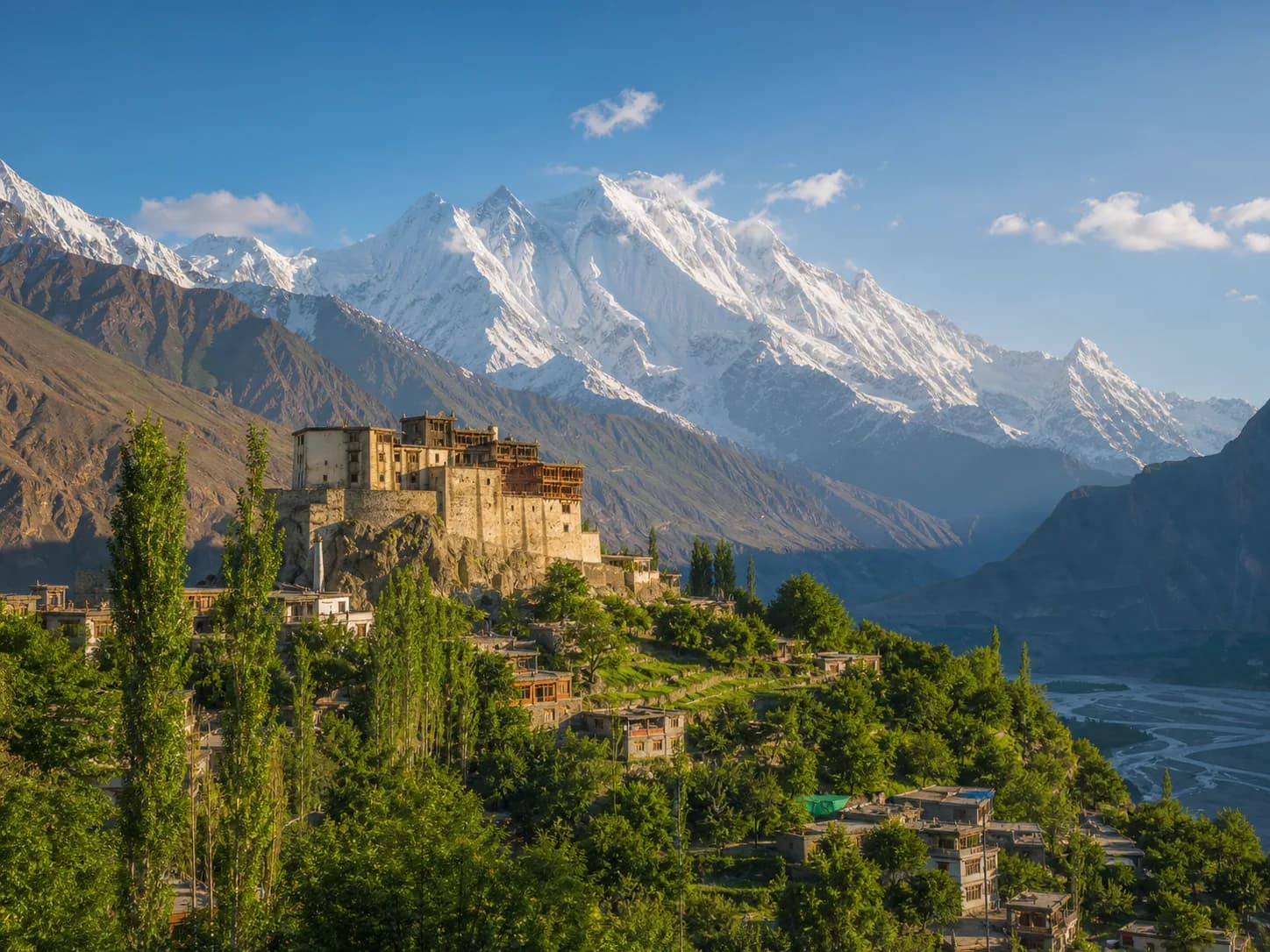
Blossom in April, meltwater green in summer and poplar gold in late October, with rooms in Karimabad booked out for all three.
 Peak
PeakKhyber Pakhtunkhwa
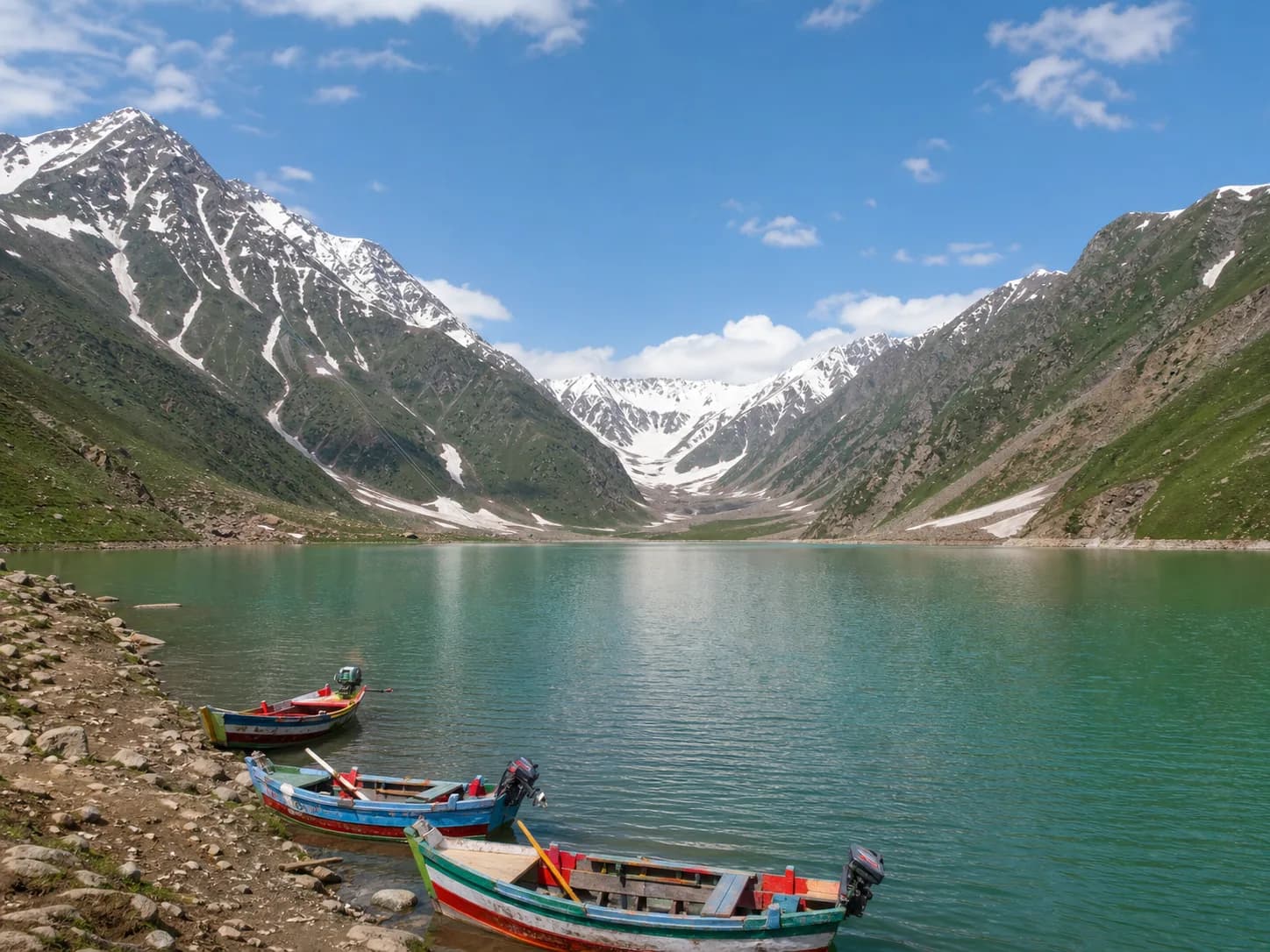
Pakistan's northern high season runs June to September, and rooms in Naran sell out weeks ahead.