 Peak
PeakMuzaffarabad
Azad Jammu & Kashmir
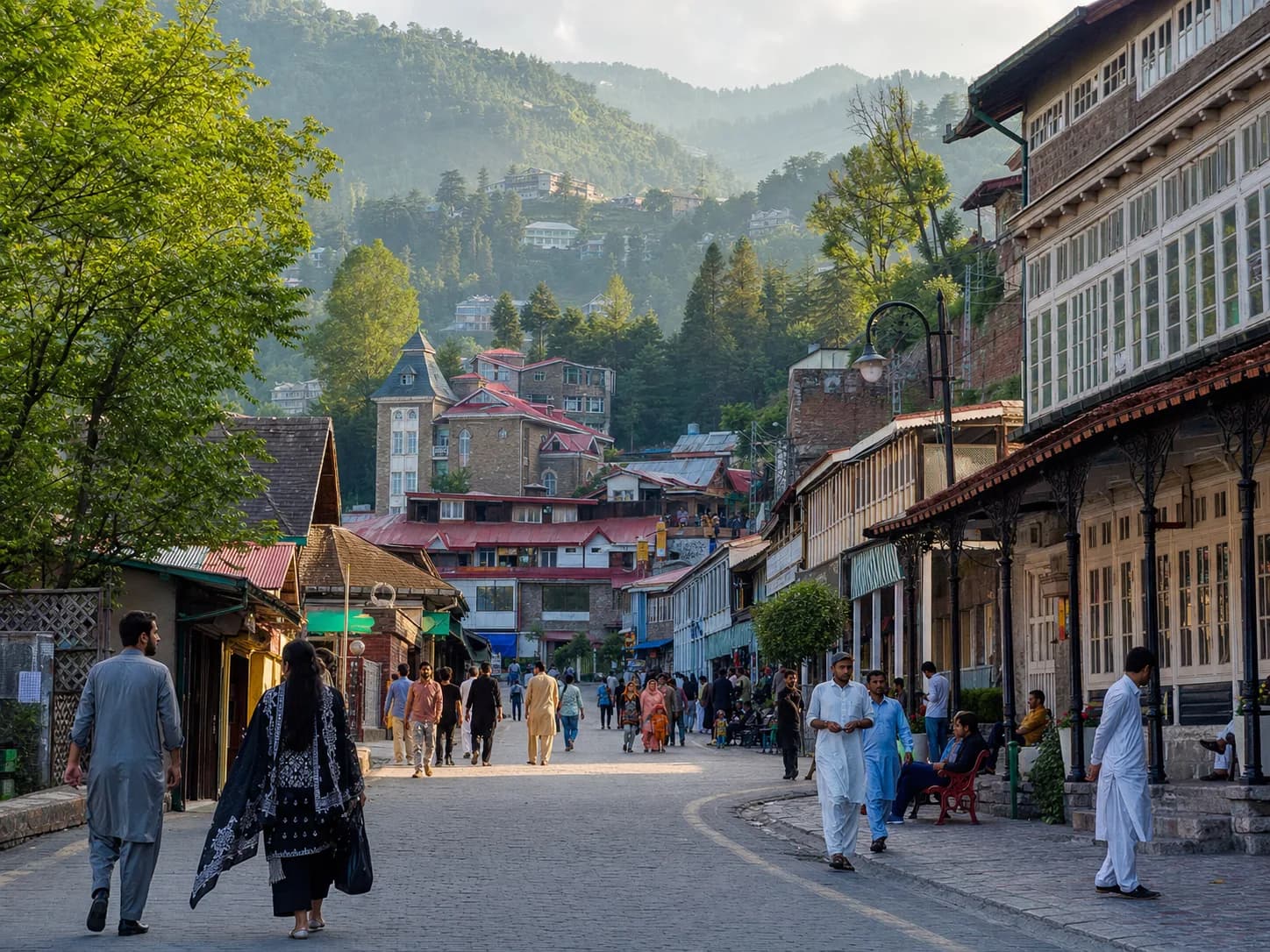
Muzaffarabad is the last full-service town before the Neelum valley, and the place to sort permits, cash and fuel.
from Rs 4,500/nightView stays
Destination guide
The Neelum valley road runs roughly 240 kilometres from Muzaffarabad to Taobat, and how far up you go decides the trip. Rooms run Rs 4,500 to Rs 10,000, with better hotels at Rs 12,000 to Rs 20,000. Snow closes the valley above Kel from about November to May. Foreign nationals normally need an NOC.

Neelum is a long valley rather than a single place, and the only decision that really shapes the trip is where you stop. The road runs roughly 240 kilometres from Muzaffarabad to Taobat, and the further you go the slower and rougher it gets, so distance here is a poor proxy for time and a very poor proxy for effort.
Kutton, an hour and a half from Muzaffarabad, is the easiest and most developed stop, with the Jagran side stream and a cluster of hotels. Keran sits on the river directly opposite Indian-administered Kashmir. Together they are the lower valley, comfortable within three to four hours of Muzaffarabad on decent road, and they are the right answer for a short trip or a first visit.
Sharda, four to five hours up, has the ruined Sharda Peeth site and the best mid-valley accommodation, and it is the natural base for anyone with more than a long weekend. Kel is the base for Arang Kel. Taobat, at the head of the valley, is another three hours of rough road beyond that. Plan two nights minimum above Keran — anything less and the road eats the trip.
June to September is the peak, and within it the calendar is set by two things: snow at the top and rain in the middle. Snow closes the road above Kel from roughly November to May, which puts Arang Kel and Taobat firmly out of reach for half the year. Ratti Gali Lake is usually accessible from late June to September, which is a narrower window still and the reason a lot of trips end up in July or August by default.
That is also the wettest and most disrupted period. Between July and September, monsoon landslides regularly block sections of the road for several hours with no advance warning. This is not a reason to avoid the valley in summer — it is when the valley is open — but it is a reason to keep a spare day and to avoid promising anyone you will be back by a particular evening.
The lower valley to Keran is generally accessible year-round, though winter driving needs care. A late-autumn or early-spring trip to Kutton and Keran is a real option and a quiet one, provided you understand that the upper valley, Ratti Gali and Arang Kel are not part of it.
The road from Muzaffarabad is paved and reasonable as far as Keran, then deteriorates progressively. Beyond Kel it is a rough jeep track. That single sentence is most of what you need to plan around: an ordinary car handles the lower valley fine, and the further you intend to go, the more the vehicle question stops being about comfort and becomes about whether the trip is possible at all.
Ratti Gali Lake is reached by jeep from Dowarian, roughly three hours on a rough track, followed by a walk to the lake itself. Going up and back in one day is long but it is done. Arang Kel is reached from Kel by a short cable lift across the river and then a steep uphill walk of about an hour — worth knowing before you arrive expecting to be driven to it.
Landslides between July and September are the other road variable and they are genuinely unpredictable. Sections get cut for several hours at a time. The practical response is not to avoid the season but to travel in daylight, keep the fuel tank fuller than you need, and treat any tight onward connection as a bad idea.
Foreign nationals generally require a No Objection Certificate for travel into the upper valley, because long sections of the road run within sight of the Line of Control. It needs arranging before you set off rather than at a checkpost: checkposts will turn back travellers who do not have one, and there is no way to fix that on the spot.
That is the extent of what we will state, and the limit is deliberate. Requirements in this area change, and we are a booking desk rather than an authority on them: we do not process permits or issue NOCs, and nothing here is legal advice. Confirm the current position with the relevant authority before you travel. We are happy to tell you what guests have needed recently, which is a more honest kind of help than a procedure copied off a website.
One rule is not administrative and applies to everybody: photography of military positions is not permitted anywhere along the river. Some hotels also ask to see documentation at check-in, so carry whatever you have arranged rather than leaving it in a bag in the vehicle.
There are no dependable ATMs above Muzaffarabad and card payment is not accepted in the valley, so carry enough cash for the whole trip including the jeep, the fuel and any hut you have not prepaid. Running short at Sharda is not a problem with a local solution.
Mobile coverage is patchy and network-dependent, with long stretches of nothing above Keran and effectively none beyond Kel. Tell someone your route and your expected return before you leave Muzaffarabad. That is standard advice everywhere and actually necessary here, because a landslide plus no signal is how a delayed trip becomes a search.
Muzaffarabad itself is the last place with reliable banks, fuel and vehicle workshops, which is why so many Neelum trips are planned as a night there and a start the following morning. It is also not a road to drive after dark, so if you reach Muzaffarabad in the afternoon, the sensible move is usually to stop.
River-facing guesthouses and wooden huts in Kutton, Keran and Sharda run Rs 4,500 to Rs 10,000 a night. The handful of better hotels sit at Rs 12,000 to Rs 20,000. Huts and cabins are common in this valley and are often better value for families than a hotel room, since they tend to sleep more people for the same money. All of these are indicative bands; a quote against your dates is the real figure.
Expect thirty to fifty percent more in July and August. The more important constraint is not price but stock: the valley's total room supply is small, so Eid holidays and peak weekends need booking three to four weeks out rather than a few days. Late requests in August tend to end with you staying somewhere other than where you planned, which in a 240-kilometre valley is a bigger difference than it sounds.
Beyond the room, budget for the jeep. Ratti Gali from Dowarian is a full-day hire on a rough track and the fuel is a real component of it. We do not publish a rate for it because there is no dependable band to publish — ask what it costs when you are arranging the trip, and confirm whether the price is per vehicle or per seat before you agree to it.
Kutton is the easiest base and the most developed, with the Jagran side stream and the largest cluster of hotels in the lower valley. It suits a short trip, families, and anyone who does not want to spend a whole day in a vehicle before their holiday starts.
Keran puts you on the river with the far bank in view, which is a large part of why people come. Sharda, four to five hours up, has the best mid-valley accommodation and the ruined Sharda Peeth site, and is the base to choose if you have four or more nights. Kel is functional and exists mostly as the jumping-off point for Arang Kel across the river.
Taobat, at the head of the valley, is for people who want the end of the road and are prepared for three more hours of rough track to get there. Whatever you pick, the small room stock is the thing to plan around — availability and current rates for your dates come back through the Neelum Valley hotels hub, and the guesthouses and huts up here are largely the sort of property that never appears on the big booking sites.
Five days is what the valley wants if Ratti Gali or Arang Kel is on the list, because both are full days on top of the driving. Three works for Kutton and Keran alone. As always this is a shape rather than a schedule — a monsoon landslide will rewrite it without asking.
Three and a half to four hours from Islamabad by either route. Muzaffarabad is the last town with reliable banks, ATMs, fuel and workshops, so draw cash for the whole trip and fill the tank. If you arrive after mid-afternoon, stay — the Neelum road is not one to drive after dark.
Kutton is an hour and a half from Muzaffarabad, with the Jagran side stream and the valley's easiest cluster of hotels; Keran sits on the river with the far bank in view. Both are comfortable within three to four hours on decent road. River-facing guesthouses and huts run Rs 4,500 to Rs 10,000.
Jeep from Dowarian, roughly three hours on a rough track, then a walk to the lake. Usually accessible from late June to September only. It is a long day up and back, so start early and confirm the jeep the night before. Outside that window, push on up the valley to Sharda instead.
Sharda is four to five hours from Muzaffarabad, has the ruined Sharda Peeth site and the best mid-valley accommodation. Beyond Kel the road becomes a rough jeep track, and Arang Kel is reached from Kel by a short cable lift and then about an hour of steep climbing.
The drive out is the same road in reverse and takes as long. Leave early: between July and September landslides cut sections for several hours with no warning, and you want that to happen with the afternoon still ahead of you rather than at dusk. Taobat, another three hours of rough road above Kel, is a sixth-day trip rather than a detour.
The guide stops where the booking starts. Rates, areas and availability live on the hub pages, and one request reaches the guesthouses and rest houses that never appear on the big booking sites.
Most trips to Neelum Valley pair with somewhere close by. These are the stops travellers add most often.
PeakAzad Jammu & Kashmir
Muzaffarabad is the last full-service town before the Neelum valley, and the place to sort permits, cash and fuel.
 Open
OpenIslamabad Capital Territory
Guesthouse rooms in F-6 and F-7 sell out four to six weeks ahead through wedding season, October to March.
 Open
OpenPunjab
Murree has two peaks a year, the June to August heat escape and the late December snow rush, and rates roughly double in both.