 Peak
PeakKaghan
Khyber Pakhtunkhwa
Kaghan village is the last cheap stop before Naran, about twenty-five kilometres and forty minutes short of it.
from Rs 4,500/nightView stays
Destination guide
Naran is open roughly May to October and peaks from June to September. The drive from Islamabad is 270 kilometres and takes seven to nine hours. Rooms run Rs 5,500 to Rs 12,000 in June and September and Rs 15,000 to Rs 28,000 through July and August. Babusar Top usually opens in late June.
Naran's season is short, which means the calendar makes most of your decisions for you. The valley is open roughly May to October, and the peak runs June through September. In June and September a decent double runs Rs 5,500 to Rs 12,000. Through July and August, and especially on weekends, that same room costs Rs 15,000 to Rs 28,000, and the better riverside properties cross Rs 35,000.
That leaves two windows worth knowing about: late May and early October. Both are quiet, both are roughly half the peak rates, and the valley is still open. Both are also narrow and a little risky — food choices are limited outside the main season, and an early or late snowfall can rearrange your plans with very little notice.
Nights are cold in every month of the year. Naran sits at about 2,400 metres on the Kunhar river, so July nights still call for warm clothing even when Islamabad is not. Pack for the altitude rather than the forecast you checked before leaving.
The drive from Islamabad is 270 kilometres and takes seven to nine hours: the Hazara Motorway as far as Mansehra, then Balakot, Kawai and Kaghan. Treat any estimate under seven hours as optimistic, particularly through July and August traffic.
The stretch above Kawai is the slow part. It is narrow, it climbs steadily, and landslides after heavy rain close it for hours at a time. Leaving early is less about beating the crowds than about keeping daylight and slack in hand if the road stops moving — which, in the monsoon months, it periodically does.
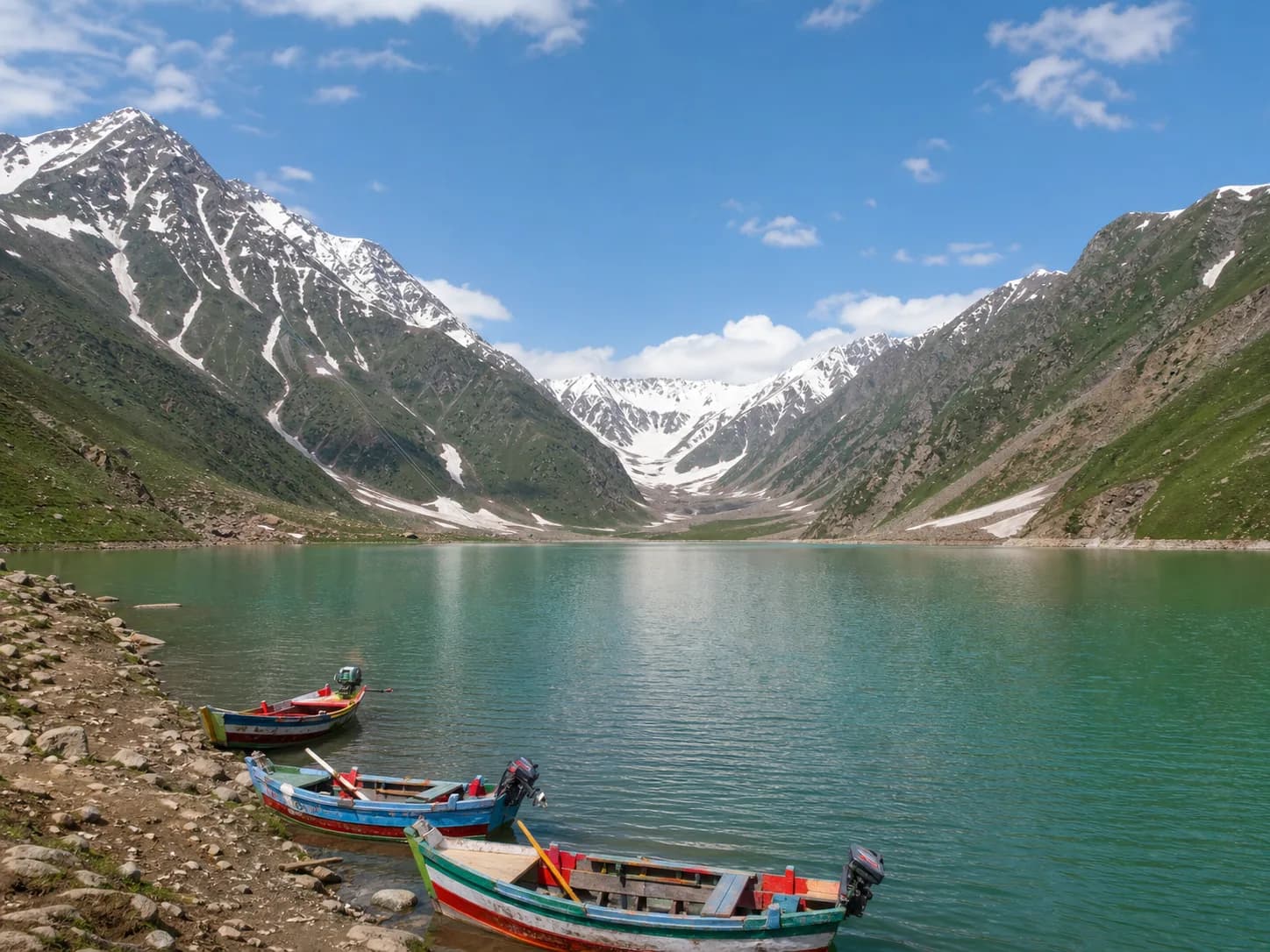
The last nine kilometres of the trip most people came for are not a road at all. The track up to Saif-ul-Malook is rough enough that ordinary cars should not attempt it, and the jeeps that run it leave from the stand in Naran bazaar.
Two closures decide what a Naran trip can contain. The first is winter. Snow closes the road above Kaghan from about November until May, most hotels board up for the season, and the permanent population moves down the valley. Outside the season, the town does not run quietly — it shuts.
The second is Babusar Top, the 4,173-metre pass that links Naran to the Karakoram Highway at Chilas. It usually opens in late June once the snow has been cleared and closes with the first heavy fall, commonly in October. If your plan is a loop through Gilgit, that window is the entire plan. The pass can also shut for a day at any point inside the season, so confirm its status the day before you travel rather than the week before.
Neither closure is negotiable, and neither is unusual. Building a day of flexibility into a Naran itinerary costs you nothing if the roads behave, and saves the trip if they do not.
Rooms are the bulk of it and they move sharply with the calendar. Reckon on Rs 5,500 to Rs 12,000 for a decent double in June or September, Rs 15,000 to Rs 28,000 through July and August, and above Rs 35,000 at the better riverside properties in the peak weeks. A river-view room carries a premium of roughly Rs 3,000 to Rs 6,000 over the same property's bazaar-facing rooms.
The jeep to Saif-ul-Malook is a separate line, and it surprises people. Nine kilometres up the track, about forty minutes each way, Rs 4,000 to Rs 7,000 return for a vehicle seating six — and it is not included in any hotel rate. Budget it as its own cost, not as an extra.
How far ahead you book is also a cost. Three to four weeks for July and August weekends, when the valley fills with families from Punjab and Islamabad. Midweek dates in June and September can often be arranged within a week. Eid holidays are the tightest period of the year and worth booking six weeks out if your dates cannot move.
Hotels line the Main Bazaar and the riverside stretch, with quieter options further along the Kaghan road and up toward Batakundi. Riverside rooms cost more and are worth it for the sound of the Kunhar. Bazaar rooms are cheaper and put you closer to the food and to the jeep stand for Saif-ul-Malook, which matters on the morning you want to leave early.
Further up the valley, Batakundi and the Lalazar road are quieter again, and further from everything — a fair trade in peak July, a poor one if you are only there two nights and want the lake done early.
Three days is the shortest plan that does not reduce the trip to two long drives with a lake squeezed between them. This is a shape, not a schedule — the road sets the timings, not you.
270 kilometres and seven to nine hours via the Hazara Motorway, Mansehra, Balakot, Kawai and Kaghan. Leave at first light. Take a room in the Main Bazaar or on the riverside when you arrive, and plan nothing else for the evening.
A jeep from the Naran stand as early as you can manage: nine kilometres, roughly forty minutes each way, Rs 4,000 to Rs 7,000 return for a vehicle seating six. The track backs up badly by mid-morning in July and August, and afternoon cloud regularly closes the view. Back down by the afternoon, with time for the Kaghan road up toward Batakundi.
If the pass is open — usually late June onward — the drive up toward Babusar Top at 4,173 metres is the obvious use of a third day, and it is also the link to the Karakoram Highway at Chilas if you are continuing to Gilgit. If it is closed, head back down the valley and break the drive at Shogran or Kaghan instead.
The guide stops where the booking starts. Rates, areas and availability live on the hub pages, and one request reaches the guesthouses and rest houses that never appear on the big booking sites.
Most trips to Naran pair with somewhere close by. These are the stops travellers add most often.
PeakKhyber Pakhtunkhwa
Kaghan village is the last cheap stop before Naran, about twenty-five kilometres and forty minutes short of it.
 Peak
PeakKhyber Pakhtunkhwa
Shogran is a plateau at 2,360 metres reached by an eight-kilometre climb from Kawai, and the Siri Paye track above it is jeep-only.
 Peak
PeakKhyber Pakhtunkhwa
Abbottabad is the junction town for both the Galyat and the Kaghan valley, and the last place with full-service hotels before either.
 Peak
PeakGilgit-Baltistan
Gilgit is the administrative hub of the north and the place to sort permits, cash and transport before Hunza or Skardu.