 Open
OpenFaisalabad
Punjab
Faisalabad's hotel demand tracks the textile buying calendar, so rooms tighten around trade delegations rather than holidays.
from Rs 6,000/nightView stays
City hotel guide
Lahore's four zones do different jobs. Gulberg for business and central access, DHA Phases 5 and 6 for events near Fortress Stadium, Johar Town and Model Town for the hospital corridor and lower rates, Mall Road and Delhi Gate for the Walled City. Rooms run Rs 7,000 to Rs 20,000; wedding season adds thirty to fifty percent.
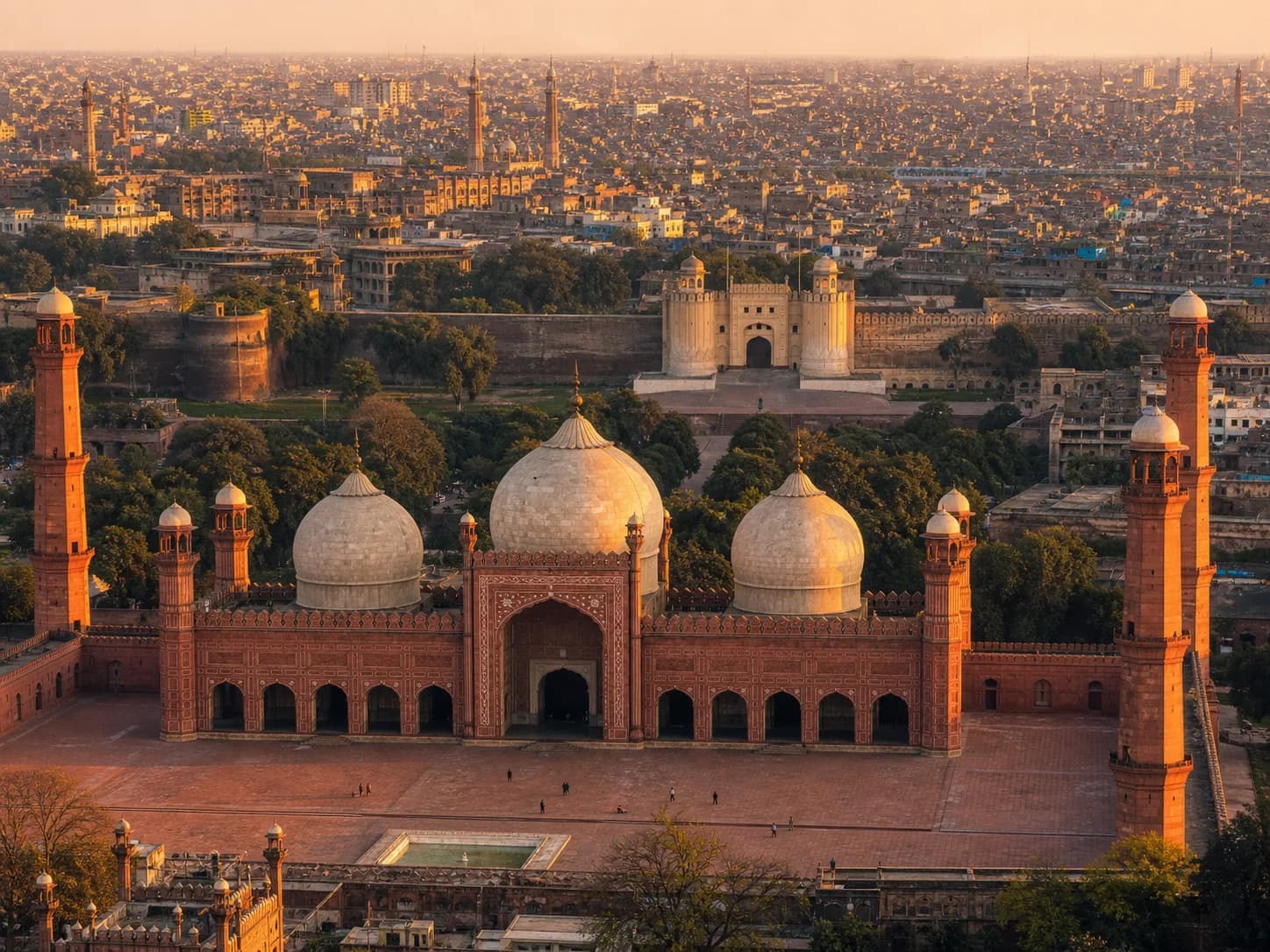
This is the page for working out where in Lahore you should be, not for booking a room. If you have already settled the area and the dates, /hotels/lahore is quicker — it carries the areas, the price bands, the season note and the enquiry form, and it will come back with quotes. Stay here if you are still deciding, because in a city this size the area is the decision and the hotel is a detail that follows from it.
Lahore's accommodation clusters in four zones with genuinely different characters, and they are not interchangeable at the same price. Gulberg holds the largest concentration of business hotels and boutique guesthouses, close to MM Alam Road and Liberty Market. DHA Phases 5 and 6 are newer and quieter, and suit anyone with an event in the Cavalry Ground or Fortress Stadium belt. Johar Town and Model Town serve the hospital corridor and the Emporium Mall traffic. Mall Road and the Old City edge put Badshahi Mosque, the Fort and Anarkali within walking distance and put constant noise inside the room.
The reason to take this seriously is that Lahore does not forgive a wrong guess the way a smaller city does. Gulberg to the Walled City is a twenty-five-minute drive, not a stroll, and summer heat makes even short walks between districts unpleasant. Whatever you picked, you will do it twice a day.
If the trip is business, Gulberg is the default and it is the default for a good reason: the largest concentration of business hotels in the city, central enough to reach most of it, and with MM Alam Road and Liberty Market on the doorstep for the part of a business trip that happens after six. Three- and four-star rooms in Gulberg and DHA run Rs 9,000 to Rs 20,000, and the five-star properties on Mall Road and in Gulberg sit at Rs 40,000 to Rs 75,000 before tax.
If the reason for the trip is an event — a wedding, a function, anything in the Cavalry Ground or Fortress Stadium belt — DHA Phases 5 and 6 are the better answer. They are newer, quieter and close to that side of the city, and being near the venue is worth more than being near the centre on a night that ends at one in the morning. The catch is that DHA and Gulberg are exactly the two zones that carry the wedding-season premium, so if the event is between October and March, book before you have finalised anything else.
If you are here for a hospital, stay in Johar Town or Model Town. The record is blunt about what those areas serve — the hospital corridor and the Emporium Mall traffic — and for a medical trip that proximity is the entire point. Guesthouse rooms there start around Rs 7,000, which is the cheapest of the four zones, and for a long treatment stay the difference compounds. The trade-off is distance from the airport, which matters on the day you leave rather than the days you are here.
And if the reason you are coming is the Walled City, sleep in it or beside it rather than commuting to it. Mall Road and the Delhi Gate edge put Badshahi Mosque, the Fort and Anarkali within walking distance. Restored haveli rooms inside the Walled City run Rs 18,000 to Rs 35,000, and they are a different product from a hotel room rather than a more expensive one — worth one night for what the building is, not five for where it is. Everywhere in this zone comes with constant noise, which is the honest cost of the address.
Allama Iqbal International Airport sits east of the city near Barki Road, which is a fact worth holding on to when you pick a zone. It is about 30 minutes from Gulberg in normal traffic and about 45 from Johar Town. That fifteen-minute gap does not matter for an afternoon flight and matters a great deal for a 6am one, and it is the single clearest reason not to put a short trip with an early departure in the west of the city.
The Orange Line Metro Train crosses Lahore east to west in about 45 minutes and skips the worst of the Ferozepur Road congestion, which is the one piece of public transport here that changes what is possible for a visitor. It works if your two anchor points happen to sit on it. If they do not, app-based cars and rickshaws are plentiful and cheap, and they are what almost everyone actually uses. What does not work is walking between districts — that twenty-five-minute drive from Gulberg to the Walled City is a drive.
For onward travel, the M-2 reaches Islamabad in about four and a half hours across roughly 375 kilometres, with service areas at Bhera and Kallar Kahar, and the M-3 and M-4 run south toward Faisalabad and Multan. Trains leave from Lahore Junction, with the Karachi route running overnight, though punctuality varies widely enough that a train should not be the leg your onward booking depends on. Flying to Islamabad takes 45 minutes, but the airport transfers at both ends usually erase the advantage.
Lahore's comfortable stretch is October to March: daytime temperatures in the twenties, the food streets busy, and genuine spring weather in February and March. Every visitor wants those months, and so does every wedding. Gulberg and DHA raise rates thirty to fifty percent through the season and some properties enforce two-night weekend minimums, which means a one-night Saturday trip in November may simply not be purchasable at the rate you were expecting.
Two other things tighten the whole city rather than one zone. Cricket international weeks at Gaddafi Stadium and major exhibition dates at Expo Centre pull demand across every price band at once, and they are not on the calendar most visitors check. If your dates are fixed, it is worth finding out whether either is on before you assume a room will be available at short notice. Lead times: two weeks is comfortable from April to September, three to four weeks between October and March.
The counterweight is the smog, and it is a real planning input rather than a nuisance. From early November to late December — and the season note stretches it to early January — air quality drops sharply and flights are occasionally delayed by low visibility. Schools close. If anyone in the party has respiratory sensitivity, that window is worth avoiding outright, which leaves October and the February-to-March stretch as the reliable ones. May and June cross forty-five degrees and are cheap for exactly that reason.
Ask for the all-in nightly total rather than the room rate. The five-star bands quoted for Mall Road and Gulberg are explicitly before tax, and that convention runs down the tiers, so the number you are shown is a starting point rather than a price. If the stay is being reimbursed, settle the invoice question at the same time — whose name it will carry, and whether the property can issue a tax invoice at all — because that is a much harder conversation at check-out than at enquiry.
Between October and March, ask specifically about minimum stays before you fall for a rate. Two-night weekend minimums are common in Gulberg and DHA through the wedding season, and a quoted nightly figure that turns into a two-night commitment changes the comparison between zones entirely. It is also worth asking whether the property has a wedding block over your dates, because a hotel with four hundred guests arriving is a different hotel from the one in the photographs.
For a Walled City haveli, confirm what you are actually booking. These are restored rooms at Rs 18,000 to Rs 35,000 and they are worth it for a night as an experience of the building; they are not a substitute for a business hotel, and the noise of the Old City comes with them. The sensible shape for a first trip is one night at Delhi Gate and the rest in Gulberg or DHA, rather than choosing between them.
If you are travelling in May or June, treat the room as shelter rather than a base. Afternoon temperatures cross forty-five degrees, short walks between districts stop being an option, and everything you do gets planned around early mornings and late evenings. That is the season when it is worth paying for a location that removes a daily drive rather than for the room itself.
In this order. Zone before price, because in Lahore the wrong zone costs you an hour a day and no amount of extra spend buys it back.
Meetings and general access point at Gulberg. An event in the Cavalry Ground or Fortress Stadium belt points at DHA Phase 5 or 6. A hospital points at Johar Town or Model Town. The Walled City points at Mall Road or Delhi Gate. An early flight points east, because the airport is out near Barki Road — 30 minutes from Gulberg, 45 from Johar Town.
Guesthouse rooms in Johar Town and Model Town from about Rs 7,000. Three- and four-star in Gulberg and DHA at Rs 9,000 to Rs 20,000. Restored haveli rooms inside the Walled City at Rs 18,000 to Rs 35,000. Five-star on Mall Road and in Gulberg at Rs 40,000 to Rs 75,000 before tax. Assume tax is on top unless the quote says otherwise.
October to March: three to four weeks of lead time, a thirty to fifty percent premium in Gulberg and DHA, and two-night weekend minimums at some properties. November to early January adds the smog, which delays flights and matters for anyone with respiratory sensitivity. April to September: two weeks is comfortable, but May and June cross forty-five degrees. Check separately for a Gaddafi Stadium international or an Expo Centre exhibition on your dates.
The all-in nightly total including tax. Whether there is a minimum stay on your dates. Whether a wedding block is in the hotel while you are there. Then take it to /hotels/lahore, where one enquiry reaches the guesthouses and boutique properties that do not publish rates.
The guide stops where the booking starts. Rates, areas and availability live on the hub pages, and one request reaches the guesthouses and rest houses that never appear on the big booking sites.
Most trips to Lahore pair with somewhere close by. These are the stops travellers add most often.
OpenPunjab
Faisalabad's hotel demand tracks the textile buying calendar, so rooms tighten around trade delegations rather than holidays.
 Open
OpenIslamabad Capital Territory
Guesthouse rooms in F-6 and F-7 sell out four to six weeks ahead through wedding season, October to March.
 Off-peak
Punjab
Multan's shrine season around the Shah Rukn-e-Alam and Bahauddin Zakariya urs dates fills city hotels faster than any holiday weekend.