 Peak
PeakNaran
Khyber Pakhtunkhwa
Pakistan's northern high season runs June to September, and rooms in Naran sell out weeks ahead.
from Rs 5,500/nightView stays
Destination guide
Kaghan village sits at about 2,000 metres on the Kunhar, 25 kilometres and forty minutes below Naran. Rooms run Rs 4,500 to Rs 9,000 off-peak and Rs 9,000 to Rs 18,000 in July and August, consistently below Naran. The season is May to October, and the drive from Islamabad takes six to seven hours.

The season runs roughly May to October and the calendar does most of the work for you. Snow closes the road above Kaghan from about November until May and most commercial accommodation in the valley shuts for the winter, so the question is not whether to come in season but where inside it.
June and September are the sensible answers. The river is high with meltwater, the meadows are green, and rates sit at about half the July level: Rs 4,500 to Rs 9,000 for a room rather than Rs 9,000 to Rs 18,000. July and August are when the valley fills, when the prices peak, and — not coincidentally — when the monsoon makes the road least predictable.
Nights are cold from September onward, and the altitude means that is true earlier in the year than the Islamabad forecast will suggest. Pack for 2,000 metres rather than for the month.
Roughly six to seven hours from Islamabad. The valley road follows the Kunhar from Balakot through Paras, Mahandri and Jared up to Kaghan, and it is the same road that continues to Naran — Kaghan is a point on it rather than a turning off it.
That has one practical consequence worth building a trip around. For a family driving up from Islamabad in a single day, stopping at Kaghan rather than pushing on to Naran after dark is usually the better decision: you take forty minutes off the day's driving, you arrive with light left, and you pay materially less for the room. The forty minutes you saved is the same forty minutes you spend going up the next morning, which is the honest version of the trade.
Shogran and the Siri Paye meadows are reached by a turnoff at Kawai, an hour below Kaghan, so they fit either as a stop on the way up or as a break on the way down rather than as a day trip from the village.
The valley road is narrow and single-track in places, and between July and September heavy rain brings landslides that can hold traffic for hours with no warning. This is not an occasional event in monsoon months; it is the normal risk of travelling in them. Build buffer time into travel days rather than into the return flight.
The second constraint is winter. Snow closes the road above Kaghan from around November until May, and the accommodation follows the road — most of it shuts. There is no quieter off-season version of this valley to visit; outside May to October, there is simply less of it open.
Between Kaghan and Naran the 25 kilometres take forty minutes to an hour depending on traffic and road condition, with the same narrow and occasionally single-track character. In July and August the afternoon run up is slower than the morning one, which matters if the next day involves jeeps.
Rooms run Rs 4,500 to Rs 9,000 a night off-peak and Rs 9,000 to Rs 18,000 through July and August — consistently below Naran for equivalent quality, by roughly a third to a half. Riverside rooms carry a modest premium over the rest, less than the same view commands further up the valley.
What you give up is choice and convenience rather than quality. There are fewer restaurants, internet is less reliable, and anything involving the Naran jeep stand costs you a forty-minute drive each way. Most families consider that a fair trade in peak weeks, when the same money buys a materially better room here than it does 25 kilometres up.
One cost that is easy to miss: the guesthouses and hotels further down toward Balakot — at Mahandri, Paras and Jared — sit outside the main price band entirely and are worth asking about if you are travelling in July or August and Kaghan itself is full.
Bring cash. Card acceptance is patchy above Balakot and mobile signal drops out in stretches of the valley, so carry enough for the stay plus jeep hire and fuel. The nearest reliable ATMs are in Balakot and Mansehra, which is to say: below you, and not somewhere you will pass again until you leave.
Hotel advances in the valley are usually taken by bank transfer before arrival, with the balance settled in cash on the day. That is worth knowing when you request a quote, because it changes what you need to have arranged before you set off rather than on arrival.
Food and connectivity are the two things people are most often surprised by. Restaurant choice is thinner than in Naran and internet is less dependable, so if either matters — a family that needs dinner served, or a trip where someone has to be reachable — ask about both when you book rather than assuming a hotel of a given standard provides them.
Hotels sit along the Kaghan bazaar and the Kunhar riverside, which are the two obvious choices and the two that fill first. The riverside premium is modest and buys the sound of the river; the bazaar puts you closer to what food there is.
Below the village, smaller guesthouses are scattered at Jared, Mahandri and Paras on the way down toward Balakot. These are the fallback in a full July weekend and, for anyone who wants the valley without any bazaar at all, arguably the better choice.
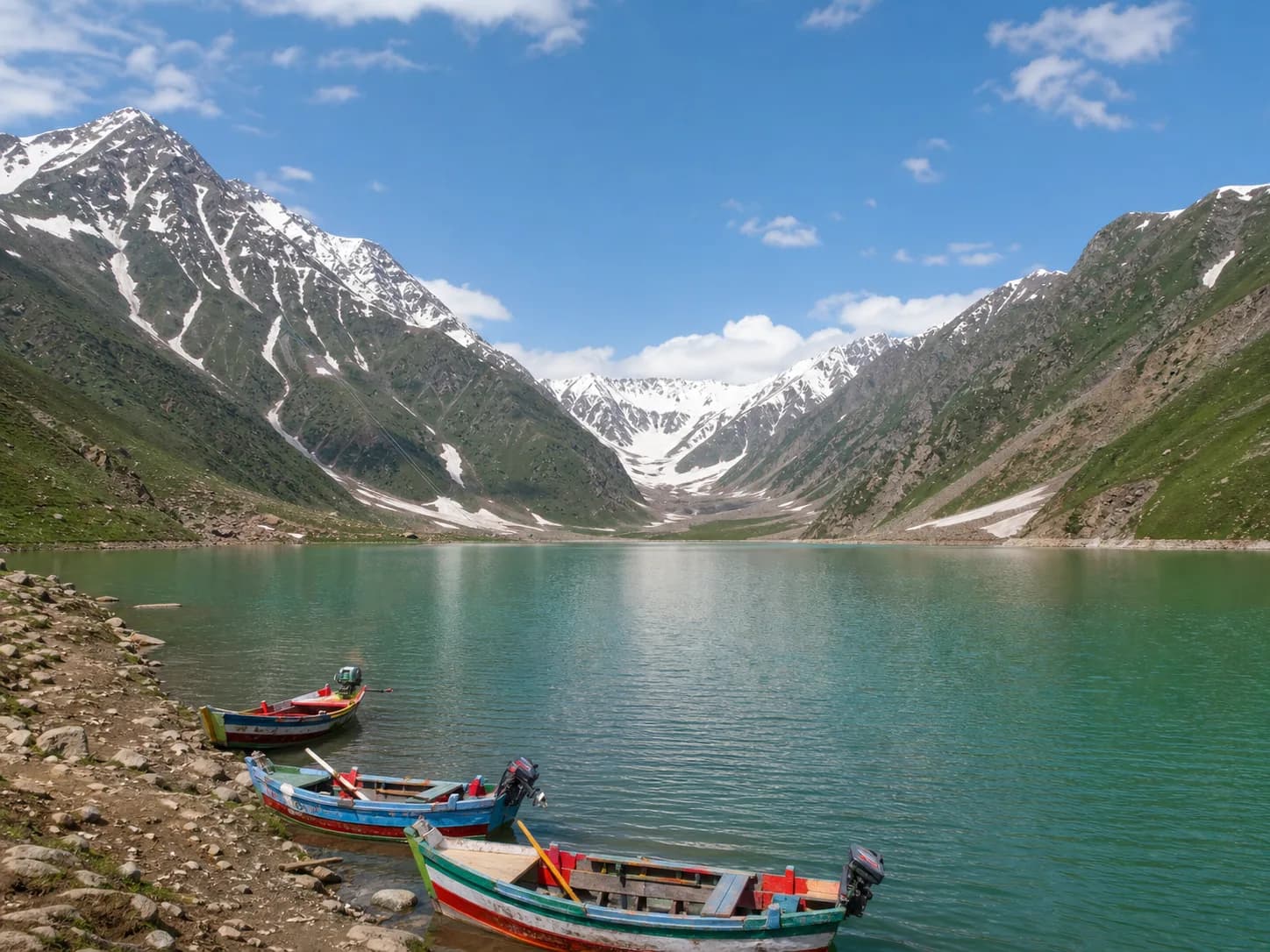
The valley itself is what you are staying for: the Kunhar, trout fishing with a permit from the fisheries office, and short walks up the side nullahs. Naran, Saif-ul-Malook and Lulusar are day trips from here rather than walks, and if the plan is centred on them, the guide to Naran is the one to read next.
Three days makes the drive worth doing and lets you use the cheaper base without losing the day trips that justify it. This is a shape, not a schedule — in July and August the road decides.
Six to seven hours via Balakot, Paras, Mahandri and Jared. Leave early — the single-track sections above Balakot are slow and, between July and September, prone to landslides that hold traffic for hours. Stopping here rather than pushing on to Naran after dark is the point of the day. Draw cash in Balakot or Mansehra on the way through.
If Saif-ul-Malook is on the list, set off from Kaghan by seven: it is 25 kilometres and forty minutes to an hour up to Naran, and the jeep stand there backs up through the morning. Come back down in the afternoon, or make it a longer day toward Lulusar and Babusar Top if the pass is open.
Back down the valley with a break at the Kawai turnoff, an hour below Kaghan, which is where the road up to Shogran and the Siri Paye meadows leaves the valley floor. A night on the Shogran plateau is a reasonable way to break the drive home rather than doing the whole six to seven hours in one run.
The guide stops where the booking starts. Rates, areas and availability live on the hub pages, and one request reaches the guesthouses and rest houses that never appear on the big booking sites.
Most trips to Kaghan pair with somewhere close by. These are the stops travellers add most often.
PeakKhyber Pakhtunkhwa
Pakistan's northern high season runs June to September, and rooms in Naran sell out weeks ahead.
 Peak
PeakKhyber Pakhtunkhwa
Shogran is a plateau at 2,360 metres reached by an eight-kilometre climb from Kawai, and the Siri Paye track above it is jeep-only.
 Peak
PeakKhyber Pakhtunkhwa
Abbottabad is the junction town for both the Galyat and the Kaghan valley, and the last place with full-service hotels before either.
 Peak
PeakKhyber Pakhtunkhwa
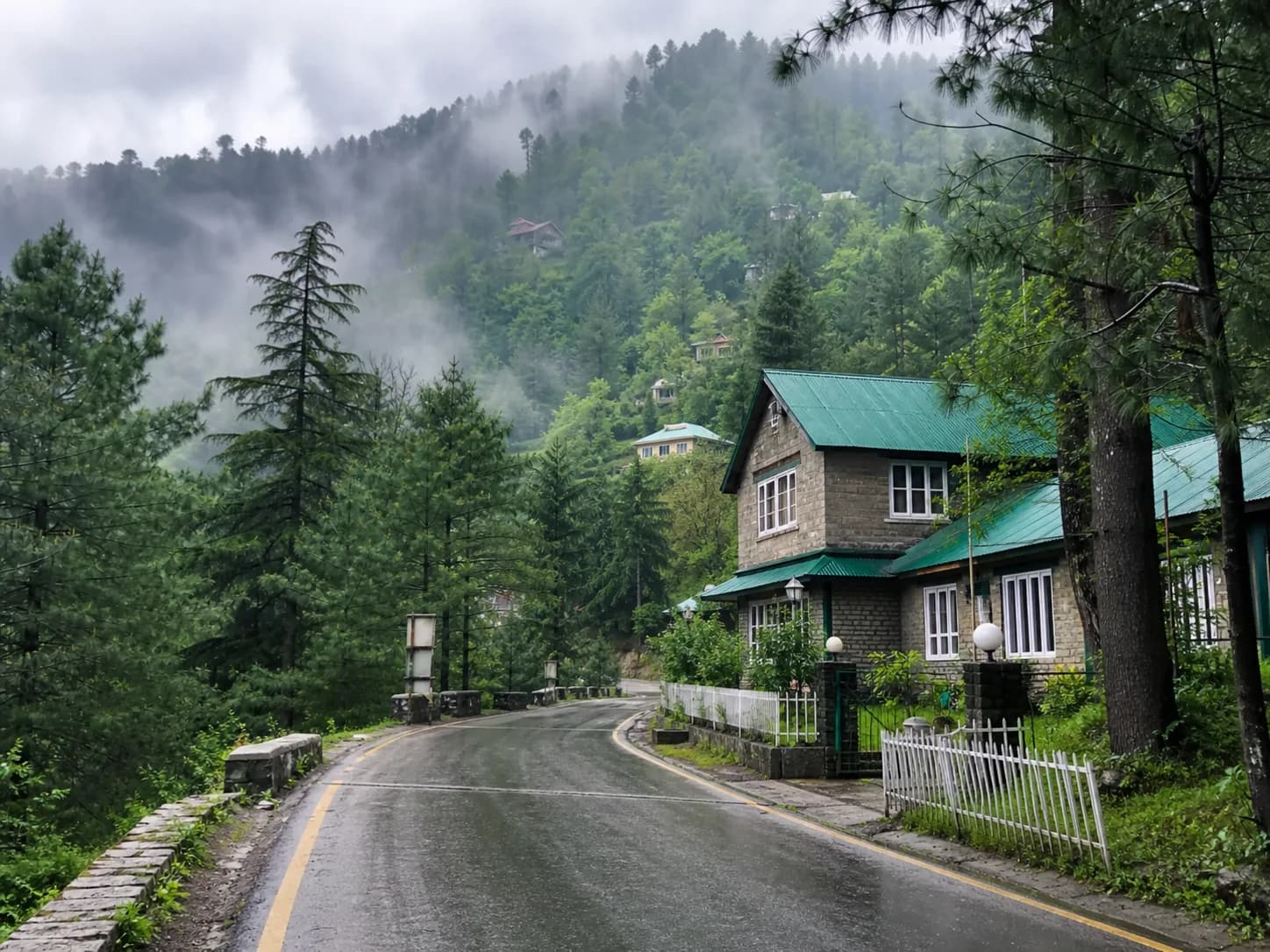
Nathia Gali sits in thick pine forest at 2,500 metres and stays ten degrees cooler than Murree, an hour further on.