 Open
OpenRawalpindi
Punjab
Rooms in Rawalpindi typically cost a quarter to a third less than the equivalent Islamabad sector, ten minutes further from the airport.
from Rs 6,000/nightView stays
City hotel guide
Islamabad's sectors decide the trip. Blue Area and F-5 for meetings, F-6 to F-8 for guesthouses within walking distance of Kohsar Market, F-11, E-11 and G-11 for apartments and lower rates. Guesthouse doubles run Rs 8,000 to Rs 16,000, three- and four-star Rs 12,000 to Rs 25,000. Wedding season, October to March, needs four to six weeks.

This is a guide to choosing, not to booking. If you already know you want a room in F-7 next Thursday, /hotels/islamabad is the faster page — it carries the areas, the price bands, the season note and the enquiry form, and it will get you quotes. Come back here if the question is still open: which sector your trip actually belongs in, what the room should cost before anyone quotes you a number, and whether Islamabad is the right half of the twin cities at all.
Islamabad makes that question easier than most Pakistani cities, because the city was planned and the accommodation followed the plan. Sectors are not neighbourhoods with fuzzy edges, they are grid squares with a letter and a number, and each band of them has ended up doing a particular job. Once you know which job your trip needs, the shortlist writes itself and the price follows from it rather than the other way round.
Three bands, roughly. Blue Area and F-5 hold the international-brand hotels and most of the corporate meeting space. F-6, F-7 and F-8 are guesthouse country — converted family houses of eight to twenty rooms behind a gate, walking distance from Kohsar Market and Jinnah Super. F-11, E-11 and G-11 carry most of the furnished apartment stock and cost noticeably less for the same floor area. Below all of it, Rawalpindi's Saddar and the Bahria Town phases price lower again if you accept the drive.
If the trip is meetings, the sum is commute time against room rate, and Blue Area usually wins it. Blue Area and F-5 put the corporate corridor within about a ten-minute drive, which is what the premium buys: three- and four-star rooms there run Rs 12,000 to Rs 25,000, and five-star standard rooms sit between Rs 45,000 and Rs 80,000 before tax. F-10 and F-11 are quieter and usually Rs 2,000 to Rs 4,000 cheaper a night for the same standard of room — a fair trade if your meetings start in the afternoon, a poor one if you are crossing the Srinagar Highway between 8am and 10am.
A family visit or a short leisure trip belongs in F-6 or F-7. That is where the guesthouses are, the rate usually includes breakfast, and Kohsar Market, Jinnah Super and the Margalla trailheads are walkable rather than a drive. The format suits families better than a hotel does — a shared lounge, a cook rather than a restaurant, and staff who will arrange laundry and an airport run. Rs 8,000 to Rs 16,000 a night is the working range, with the F-6 and F-7 addresses at the top of it.
A wedding you are attending is a different problem, and the usual mistake is booking rooms when you should be booking a house. Families block entire guesthouses in F-6, F-7 and F-8 for relatives flying in, which is exactly why those sectors go four to six weeks ahead between October and March. If six of you are coming for the same event, ask for the whole-house rate rather than six separate room rates, and ask early — by the time the invitations are circulating, the good houses in the F sectors are gone.
Anything past a week changes format again. F-11, E-11 and G-11 hold most of the furnished apartment stock and cost noticeably less for the same floor area, and past two weeks a serviced apartment generally beats a hotel on both price and sanity. Guesthouse and apartment operators discount fifteen to twenty-five percent on longer stays, and they will not volunteer that number unless you ask for it by name.
Islamabad International Airport is about 30 kilometres west of Blue Area, roughly 40 minutes along the Srinagar Highway outside rush hour and considerably longer between 8am and 10am. That is the number that should decide where you sleep the night before an early departure, and for most of the F sectors it is the wrong number. Airport Housing Society and Fatima Jinnah Town cut the drive to under 25 minutes, and the Rawalpindi side is closer again — if the flight is at 6am, the cheaper room is also the better one.
App-based rides between the airport and the city cost Rs 1,800 to Rs 3,000 depending on the time of day, and they get scarce after midnight. For a late arrival, pre-book a hotel pickup rather than assuming an app will find you a car at 2am. It is a small cost against a real risk, and properties in every sector arrange it as a matter of routine.
By road the city reaches further than its size suggests. The M-2 covers Lahore in about four and a half hours and the M-1 puts Peshawar under two, which matters if you are treating Islamabad as a base for a wider trip rather than a destination in itself. Two local quirks are worth knowing before you plan a weekend around them: the Pir Sohawa road backs up badly on Sunday evenings, and the Margalla trails close occasionally after heavy rain in July and August.
Rates here follow the calendar rather than the weekend, which is unusual and worth planning around. Wedding season runs across October, November, February and March, and it fills the F-6 to F-8 guesthouses four to six weeks out because families block whole houses for out-of-town relatives. That is less a rate rise than an inventory problem — the rooms are gone, and what is left is what did not sell.
Conference weeks are the second squeeze and they are harder to see coming. Demand around the Jinnah Convention Centre tightens Blue Area availability without much warning, and the halls in Blue Area properties are held early by government and development-sector events, which takes the rooms with them. If your dates are fixed and your meetings are in the corridor, book the room before you finalise anything else. Independence Day weekend and both Eids tighten every sector within days of the dates being announced.
The inverse is the useful part. Mid-June through August is softer in the city because families head for the hills, so midweek rates drop even though the weather is at its worst — June and July regularly cross forty degrees. February to April is the best stretch to be here, and October and November are the second window, which is unhelpfully also when the weddings are. Outside those windows, two to three weeks of lead time covers most dates.
Almost nobody in Islamabad quotes tax-inclusive, so add sales tax on services to whatever figure you are given and ask for the all-in nightly total rather than the room rate. Then ask whether breakfast counts per room or per person. At the top end it is billed per head at roughly Rs 2,500 to Rs 4,500, which quietly changes the arithmetic for a couple and rewrites it for a family.
Load shedding in Islamabad is milder than in most of Pakistan, which is exactly why people skip the next question. Ask it anyway, and ask it precisely: does the generator carry the air conditioners, or only the fans and lights? In June and July that is the difference between a room and a sauna, and it is the single widest quality gap between two guesthouses quoting the same price.
If the stay is being reimbursed, settle the invoice before you arrive rather than at check-out. Ask for the property's sales tax registration number and confirm the invoice will carry your company's name and address rather than the guest's. Registered hotels and established serviced-apartment operators handle this routinely; smaller family-run guesthouses often cannot issue a compliant tax invoice at all, which is the usual reason corporate bookings end up in serviced apartments rather than the cheaper guesthouse next door.
Then the small things that cost real money. Parking inside the gate is not the same as parking on the street, and in the F sectors it is worth asking how many cars actually fit. Every registered property records CNIC details for each adult guest as routine police registration, and a minority of conservative properties ask couples for a marriage document, so confirm the policy when you enquire rather than at the desk. Check-out is noon almost everywhere and stretches to 2pm outside peak weeks if you ask at check-in rather than on the morning you leave — and if your flight is in the evening, a day-use room, from about Rs 5,500 in F-10 and G-9 or Rs 10,000 to Rs 18,000 in Blue Area and F-6, is usually cheaper than a second night.
Four questions, in this order. Taken out of order, this is how people end up paying Blue Area rates for a trip that never goes near Blue Area — or booking F-7 for a 6am flight.
Where do you need to be each morning? Meetings in the corporate corridor anchor you to Blue Area or F-5. An event or family in the guesthouse belt anchors you to F-6, F-7 or F-8. A 6am flight anchors you to Airport Housing Society, Fatima Jinnah Town or the Rawalpindi side, because the airport is 30 kilometres west of Blue Area and the drive is longer than the map implies. Everything else follows from this answer.
Guesthouse rooms Rs 8,000 to Rs 16,000 with breakfast, generator backup and parking. Three- and four-star hotels in F-6, F-10 and Blue Area Rs 12,000 to Rs 25,000. Five-star standard rooms Rs 45,000 to Rs 80,000 before tax. Pick the band first, then add sales tax on services to it, because the rate you are shown is almost never the rate you pay.
October, November, February and March are wedding season: four to six weeks of lead time, more for multiple rooms in one house. Conference weeks around the Jinnah Convention Centre tighten Blue Area without warning, and Independence Day weekend and both Eids tighten everything. Outside those, two to three weeks is comfortable, and midweek dates from mid-June to August are the softest of the year.
The all-in nightly total including sales tax. Whether breakfast is per room or per person. Whether the generator carries the air conditioners or only the lights. How many cars fit inside the gate. Add the tax invoice question if the stay is being reimbursed. Then take it to /hotels/islamabad, where one request reaches the guesthouses that never list rates anywhere.
The guide stops where the booking starts. Rates, areas and availability live on the hub pages, and one request reaches the guesthouses and rest houses that never appear on the big booking sites.
Most trips to Islamabad pair with somewhere close by. These are the stops travellers add most often.
OpenPunjab
Rooms in Rawalpindi typically cost a quarter to a third less than the equivalent Islamabad sector, ten minutes further from the airport.
 Open
OpenPunjab
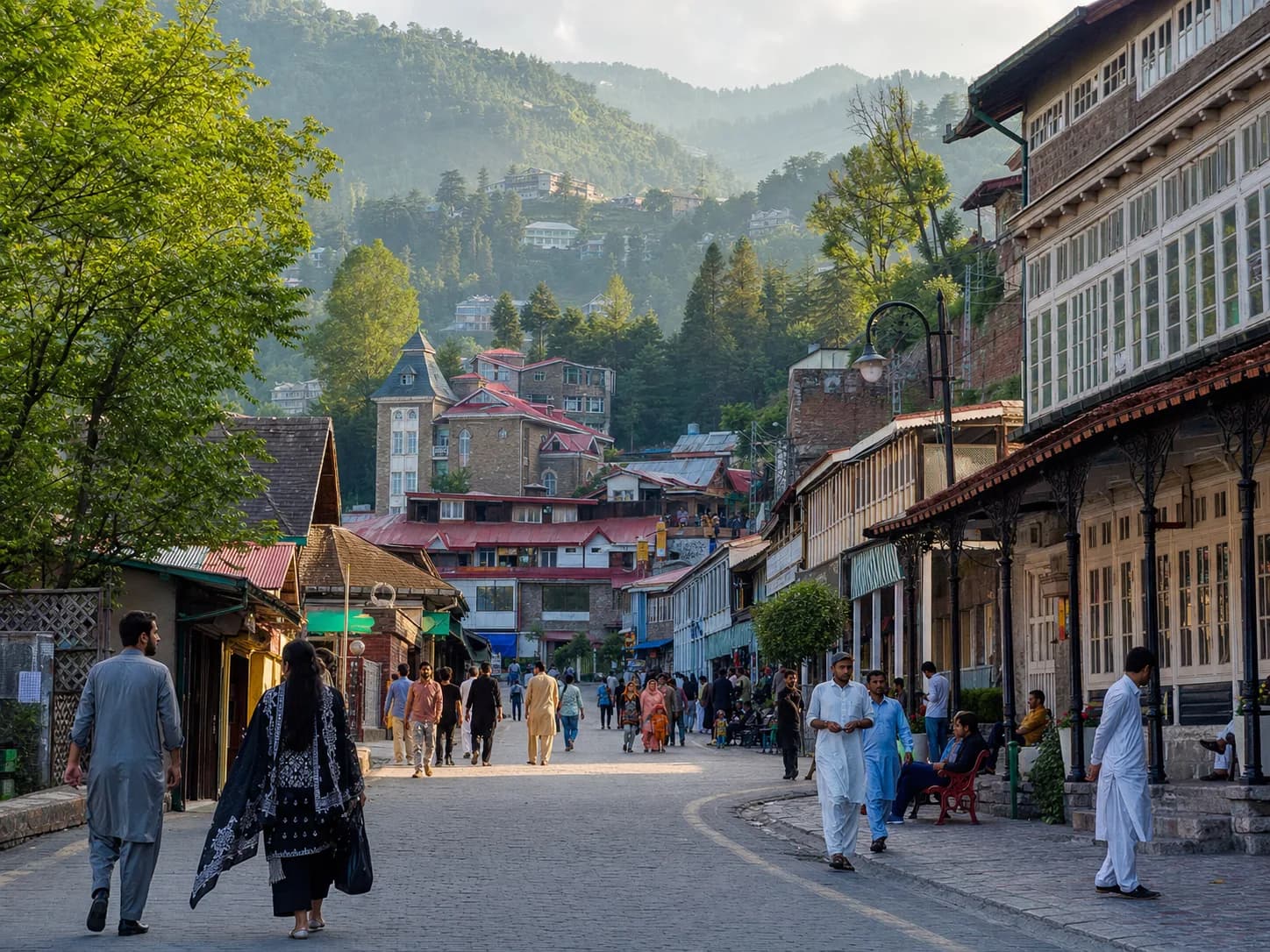
Murree has two peaks a year, the June to August heat escape and the late December snow rush, and rates roughly double in both.
 Open
OpenPunjab
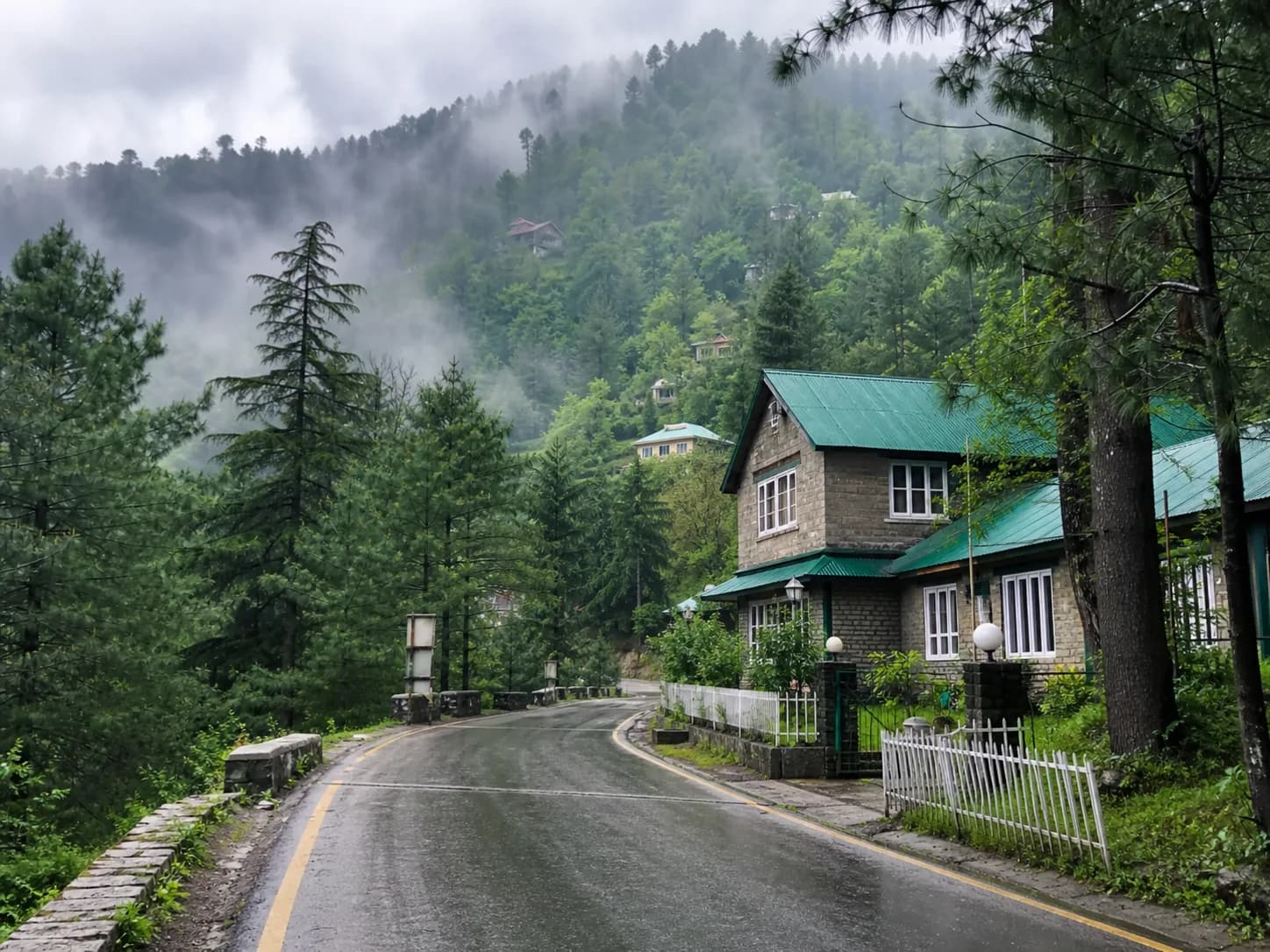
Bhurban is where corporate offsites and resort weekends go when Murree Mall Road is too crowded, about fifteen minutes short of it.
 Peak
PeakKhyber Pakhtunkhwa
Nathia Gali sits in thick pine forest at 2,500 metres and stays ten degrees cooler than Murree, an hour further on.