 Peak
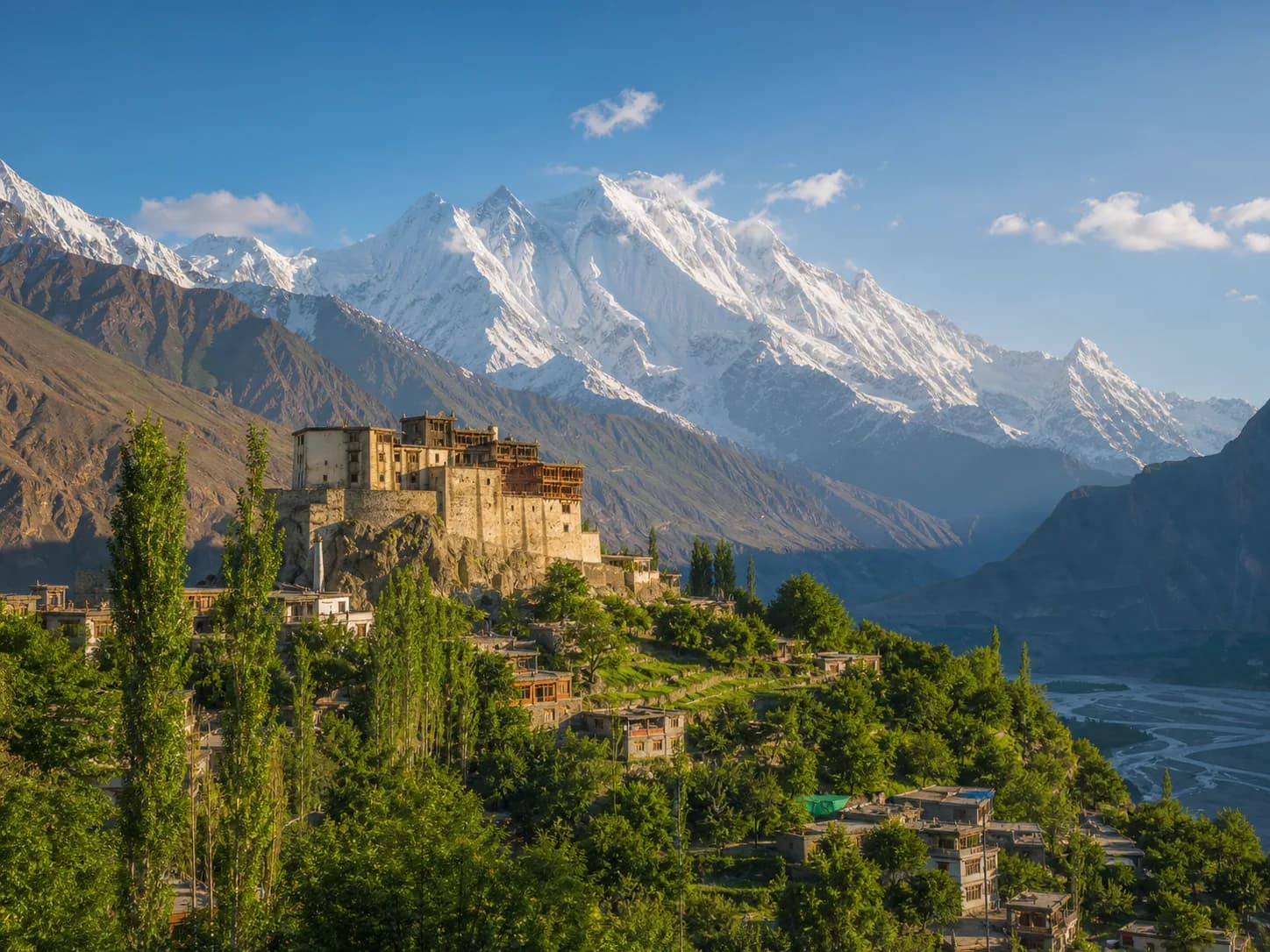
PeakHunza (Karimabad)
Gilgit-Baltistan
Blossom in April, meltwater green in summer and poplar gold in late October, with rooms in Karimabad booked out for all three.
from Rs 6,000/nightView stays
Destination guide
Gilgit is the hub of the north rather than a destination: banks, workshops and vehicle hire that the valleys above it lack. Rooms run Rs 5,000 to Rs 11,000, and Rs 14,000 to Rs 20,000 in Jutial. Flights from Islamabad take an hour but cancel often; the road via Besham takes fifteen to eighteen hours.

Gilgit is a functional town rather than a destination, and that is exactly its value. At around 1,500 metres on the Gilgit river, it holds the banks, hospitals, workshops and vehicle hire that the rest of Gilgit-Baltistan does not. Almost every trip to Hunza, Skardu or the side valleys passes through it, and the ones that go well are usually the ones that used it properly on the way through instead of treating it as a night lost.
Three things get sorted here. Cash, because ATMs further north are unreliable and frequently out of notes, and jeep hire, fuel, permits and hotel balances up the valleys are almost all settled in cash — card acceptance drops off quickly above Gilgit. Vehicles, because this is where they are. And anything mechanical, because the workshops here are the last ones with a full range of parts.
Treat it as a staging point and it does its job well. Treat it as a sightseeing stop and it will disappoint you, which is not a criticism of Gilgit so much as a description of what it is. There are two things worth doing from town and they fit comfortably around the logistics.
May to October is the season, and the two ends of it are better than the middle. April and early May bring blossom through the side valleys, which is the prettiest and least crowded window. Late September and October give clear air and autumn colour with thin crowds, and are the easier of the two to plan around because the roads are past the monsoon.
July and August are hot and dusty in Gilgit town itself, and every hotel and every jeep is booked. Room rates run about thirty percent higher and vehicle availability, not price, becomes the binding constraint — the thing that stops a July itinerary is usually that there is no jeep free for Naltar, not what it costs.
Winter is cold, very quiet and cheap: rooms at roughly half price, but limited transport up the valleys. For a trip built around Gilgit itself that is not much of a problem. For a trip that treats Gilgit as the door to Hunza or Skardu, the reduced onward transport is the whole problem.
Flying from Islamabad takes about an hour. It is also cancelled frequently for weather, sometimes for several days running, so never build a tight schedule around one — particularly the return. A cancelled flight north costs you a day; a cancelled flight south can cost you an onward connection.
The Karakoram Highway from Islamabad via Besham takes fifteen to eighteen hours and is landslide-prone during the monsoon. It is the year-round road answer and it is a long one. Overnight coaches run from Rawalpindi to Gilgit daily for anyone who would rather not drive it.
The Naran and Babusar Top route is the third option: around twelve hours, shorter and far more scenic, and open only from roughly late June to October. It is the best drive of the three by some distance and the least dependable — the pass sits at the top of the Kaghan valley and closes with the first heavy snow. If your dates fall inside the window, take it; if they fall near the edges of it, have the Besham plan ready.
From Gilgit, Karimabad in Hunza is about two and a half hours north on the Karakoram Highway, a straightforward drive. Skardu is roughly six hours east on the rebuilt Gilgit to Skardu road, a substantial improvement on the old alignment but still a full day when you add the loading and the stops. Shared vehicles and private hire both leave from Gilgit daily.
A clean mid-range double runs Rs 5,000 to Rs 11,000, and the better Jutial properties Rs 14,000 to Rs 20,000. Budget rooms near the bazaar and Konodas start lower but vary widely in what you actually get, which is why it is worth asking for photographs of the specific room rather than the property. Expect around thirty percent more in July and August. These are indicative bands; a quote against your dates is the only real number.
The bigger budget item for most people is the vehicle, not the room, because Gilgit is where onward transport gets arranged. Jeep hire for Naltar, for the Skardu road or up toward Hunza is priced per vehicle and per day, and in July and August the constraint is availability. Ask early rather than on the morning.
And then there is cash, which is a planning cost rather than a price. Draw more than you think you need before leaving town, particularly if you are heading toward Skardu or the more remote side valleys. Running short two days up a valley with no working ATM is a specific and avoidable kind of bad trip.
Hotels concentrate along Airport Road and in Jutial. Jutial, the newer district at the southern end, has the better mid-range properties and is where most visitors end up. Airport Road is the obvious choice if you are flying and the schedule is uncertain, which around here it usually is.
Konodas and the bazaar area hold the cheaper stock. It is closer to the markets and the transport stands, noisier, and much more variable in quality — fine for a single night in transit, less good if the flight cancels and one night becomes three. Danyore, across the river toward the Karakoram Highway, has a few quieter guesthouses and suits people driving in and out rather than flying.
Availability in July and August is genuinely tight, since the town fills with people staging for Hunza and Skardu at the same time. Current rates and what is actually free on your dates live on the Gilgit hotels hub.
Naltar valley is the main day trip: about forty kilometres out and two hours by jeep, with the coloured lakes and Pakistan's oldest ski slope. It is a full day, it needs a vehicle arranged in advance, and in July and August the vehicle is the hard part. It is the one thing in the Gilgit area that would justify the stop on its own.
The Kargah Buddha, a seventh-century rock carving twenty minutes from town, takes about an hour including the walk and the looking. It fits into a morning when you are waiting on something else, which — this being Gilgit — you often are.
Beyond those two, the honest advice is to spend the time on the places Gilgit is the door to. Hunza is two and a half hours north, Skardu six east. Chitral is reachable west over Shandur Pass at 3,700 metres, passable only from roughly June to October, and a two-day journey in a suitable four-wheel drive with an overnight at Phander or Mastuj.
Almost nobody comes to Gilgit for three days on its own, and this shape reflects that: one day arriving and getting the logistics right, one day for Naltar, and one day moving on. Stretch or compress it around the flight, which is the variable that will actually decide your trip.
An hour by air from Islamabad if the weather allows, fifteen to eighteen hours by road via Besham, or about twelve by the Naran and Babusar Top route from late June to October. Take a room in Jutial or on Airport Road. Draw cash for the whole trip, confirm the onward vehicle, and check anything mechanical here rather than further north.
About forty kilometres and two hours by jeep each way to the coloured lakes and the ski slope. A full day, and the one thing around Gilgit worth a day of its own. Arrange the vehicle the day before — in July and August the jeeps are the scarce resource, not the rooms. The Kargah Buddha, twenty minutes from town, is the hour-long alternative if the jeep falls through.
Karimabad is about two and a half hours north on the Karakoram Highway, past the Rakaposhi viewpoint at Ghulmet. Skardu is roughly six hours east on the rebuilt road. Shared vehicles and private hire both leave daily. Either way, leave in the morning: neither is a road to be finishing after dark.
The guide stops where the booking starts. Rates, areas and availability live on the hub pages, and one request reaches the guesthouses and rest houses that never appear on the big booking sites.
Most trips to Gilgit pair with somewhere close by. These are the stops travellers add most often.
PeakGilgit-Baltistan
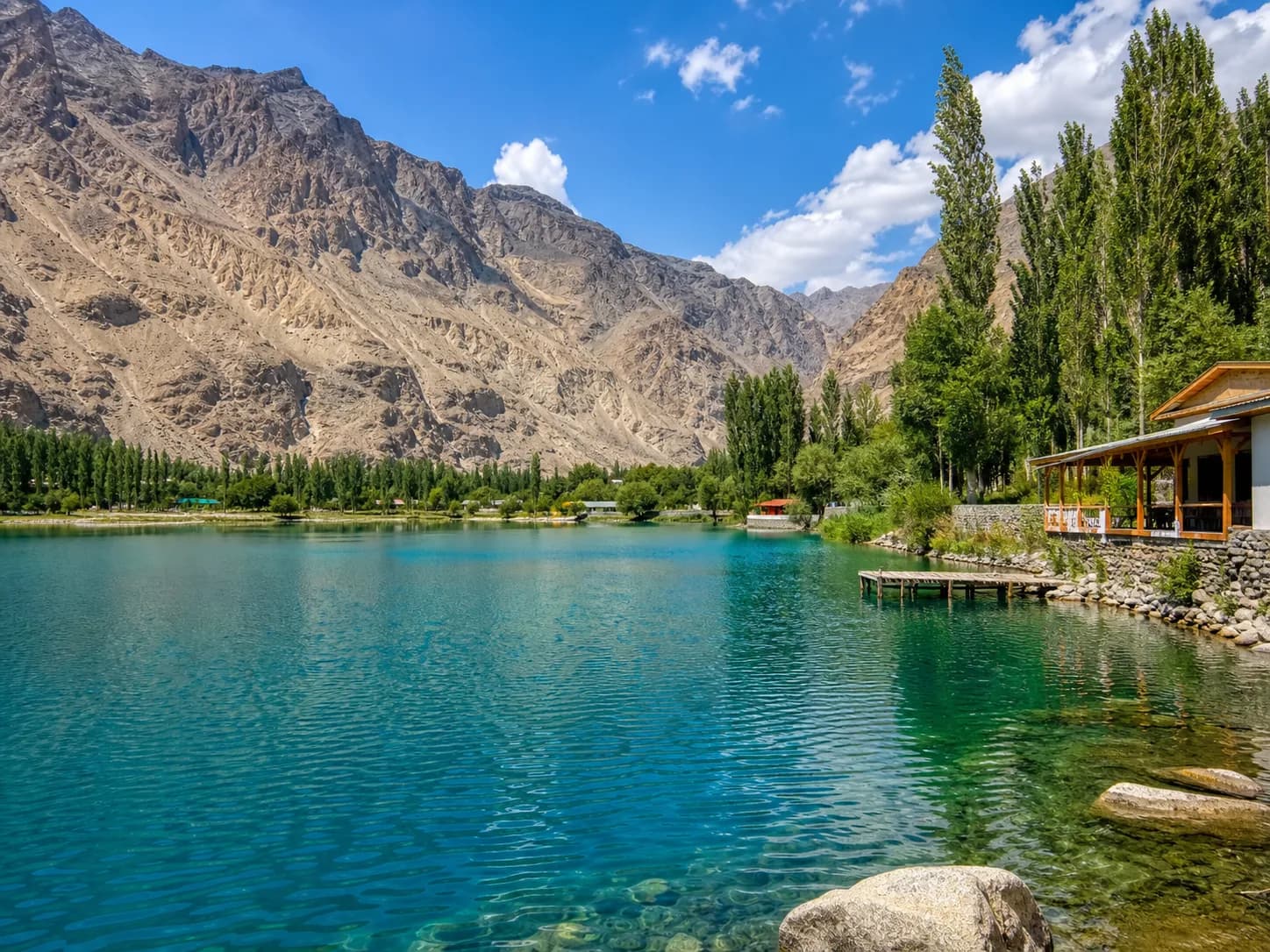
Blossom in April, meltwater green in summer and poplar gold in late October, with rooms in Karimabad booked out for all three.
 Peak
PeakGilgit-Baltistan
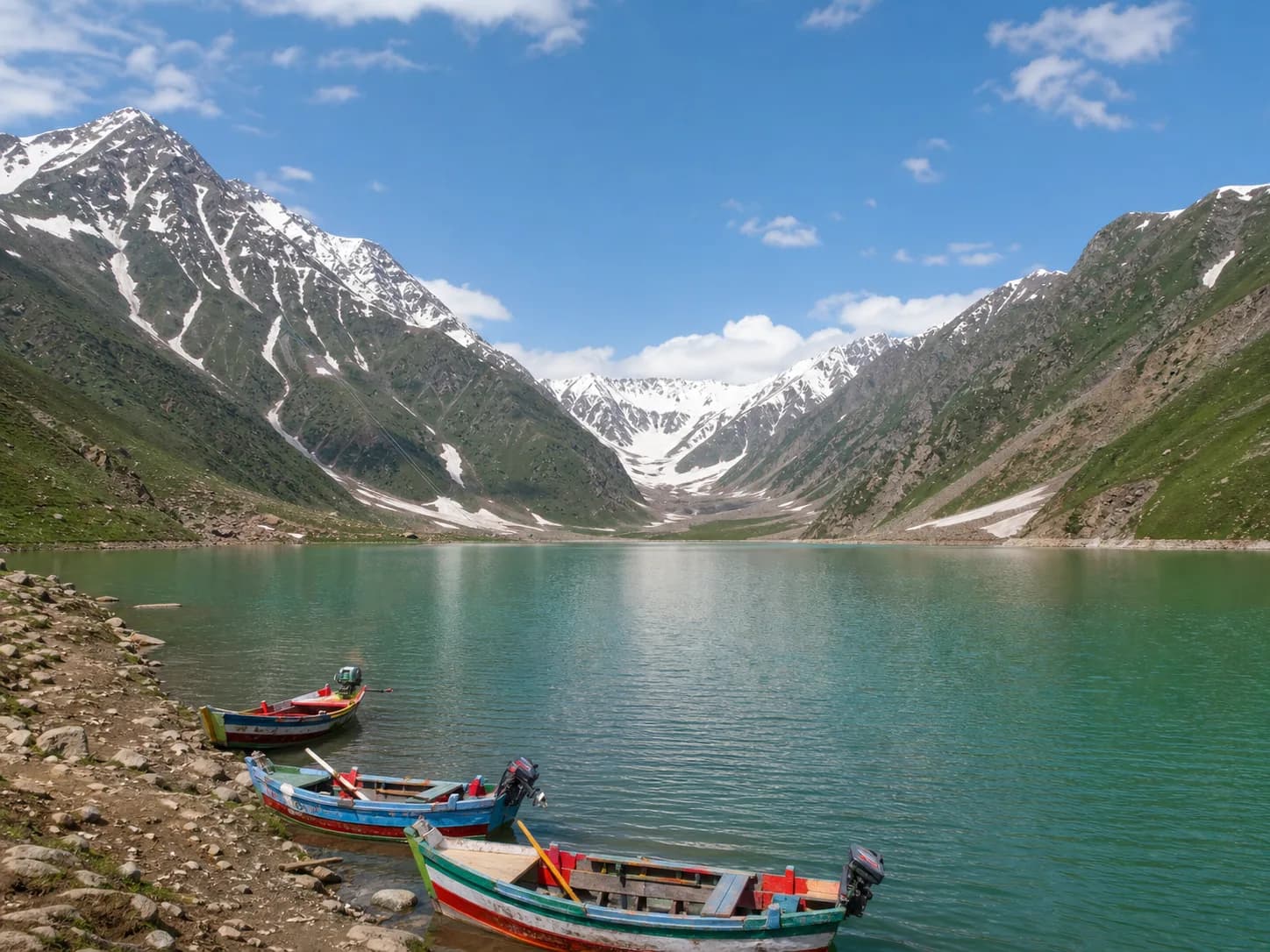
Deosai opens once the snow clears, usually late May or June, and closes again around October, which sets the shape of most Skardu trips.
 Peak
PeakKhyber Pakhtunkhwa
Pakistan's northern high season runs June to September, and rooms in Naran sell out weeks ahead.
 Peak
PeakKhyber Pakhtunkhwa
The Lowari Tunnel keeps Chitral open through winter, but Shandur Pass to Gilgit still closes with the first heavy snow.